Nuclear winter

America’s Cold War era mission is back in the spotlight as the world faces a dangerous new century

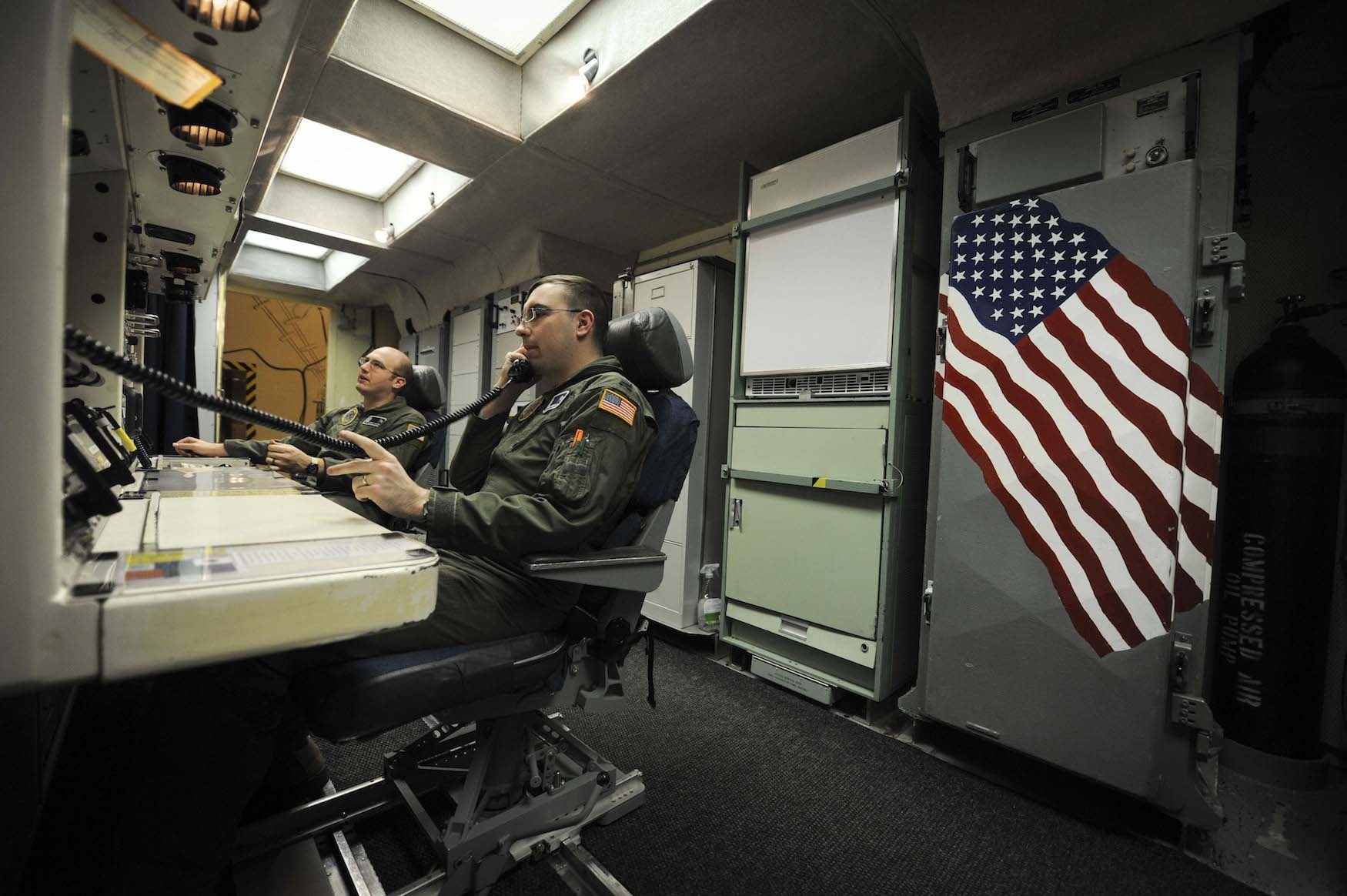
Deep below the snowy landscape of rural North America, two young airmen are sitting in a reinforced concrete bubble, with enough firepower at their fingertips to destroy much of life on Earth.

First Lieutenant Sean Raymond and Second Lieutenant Bradley Jantz are a few hours into a 24-hour shift, locked in behind two sets of concrete blast doors which are several feet thick and can only be opened by a metal spindle wheel like something from a bank vault in a heist movie.

The floor of their compact living quarters floats on a system of hydraulic levers designed to let them survive a nuclear strike on North Dakota long enough for the United States to hit back should the day finally come for apocalyptic global conflict.

"This strange bunker is the front line of America’s Number One Mission - neglected for decades, but suddenly imbued with a new sense of urgency"

In front of them in this space of old-fashioned pipes, wires and dials, the console board includes access points for launch keys and a black switch with a white arrow which can be moved to point to two settings, “Set” and “Launch”.

This strange bunker is the front line of America’s number one mission – neglected for decades, but suddenly imbued with a new sense of urgency as Russian aggression, North Korean bravado and fears of a nuclear tinderbox in the Middle East combine to make the world feel, once again, an uncertain place.

Lieutenant Raymond and Lieutenant Jantz, 25-year-olds from Fayetteville, North Carolina and Enid, Oklahoma, are responsible for ten intercontinental ballistic missiles, which have probably been pointed at Russia since the 1960s and still form part of the most profound defence of the American way of life.

At the same time, just as they have for more than half a century, 14 other pairs of missileers are also sitting in matching command centres deep under the flat North Dakotan farmland on “unbroken alert for the president”.

On the day he was assassinated in November 1963, John F Kennedy was due to deliver a speech in which he spoke of 1,000 days in which the strategic nuclear weapons of the United States had been modernised so much by the rapid deployment of missiles that potential aggressors faced the impossibility of victory and the certainty of total destruction.

“We in this country, in this generation, are – by destiny rather than choice – the watchmen on the walls of world freedom,” Kennedy had planned to say.

Nine presidents later, the men and women of the US air force base Minot maintain their watch. The command centres control 150 Minuteman III guided missiles, waiting in underground concrete silos in an arc spanning 485 miles (781km) close to the Canadian border, each one capable of carrying up to three nuclear warheads.

US Air Force Base Minot, North Dakota - the site of America’s Number One Mission

We pass one silo on the snowy journey north from the airbase on an empty stretch of the I-256, and there is little to suggest the presence of one of the 60-foot missiles sitting in its concrete launch tube below the surface.

In a landscape of broken barns and the occasional oil derrick, a small patch of a wheat field, not much bigger than a tennis court, is surrounded by chicken wire fencing.

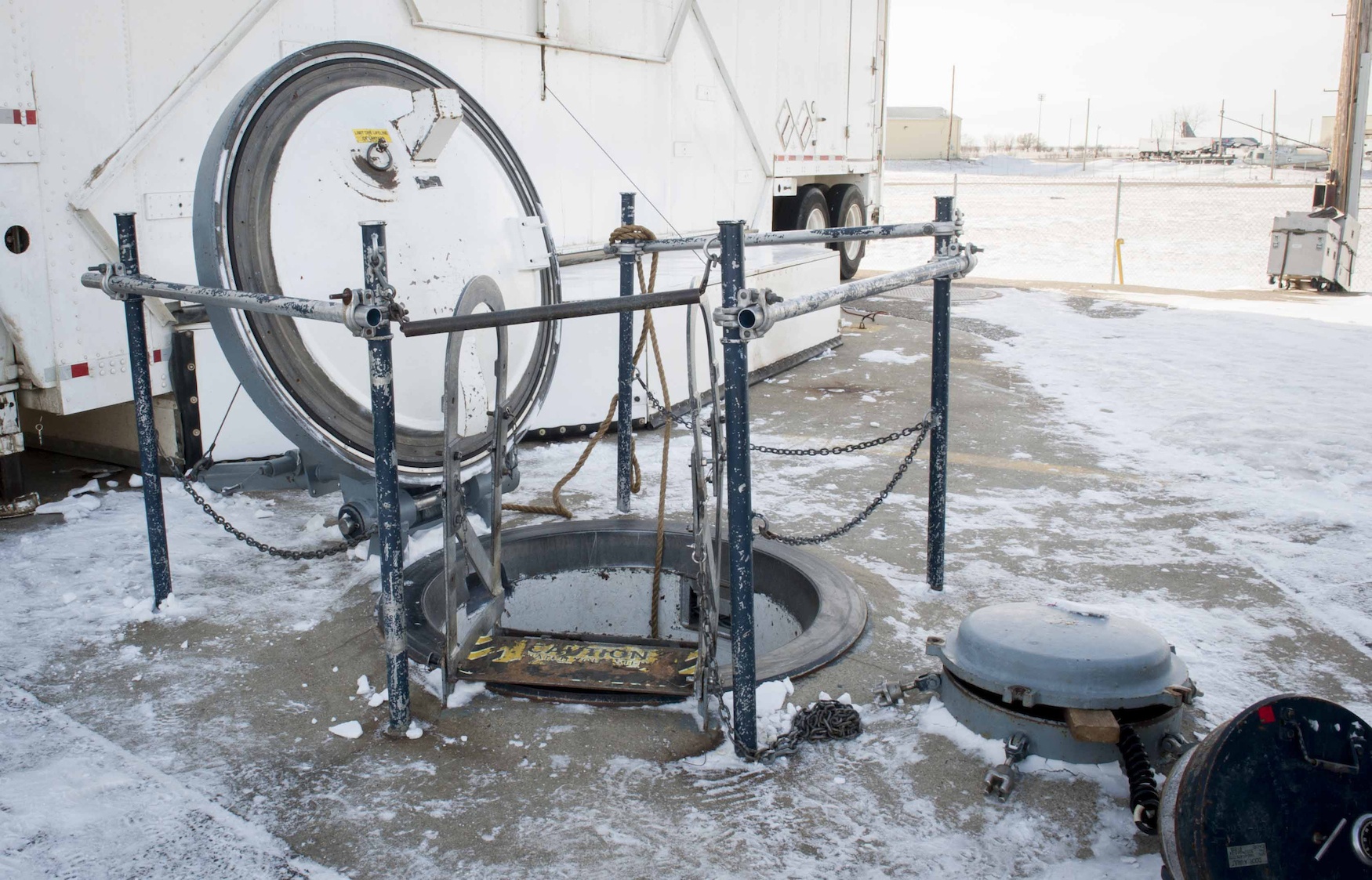
The concrete and steel silo cover is flush with the ground and invisible beneath its cover of snow. A small white pole, which looks like a phone mast but is part of the surveillance system, is the only clue to anything remotely high-tech.

About ten miles from Canada we duck off down a dirt road and our driver telephones ahead requesting permission to enter Oscar 1, a small compound with a couple of outbuildings where there are few indicators of the business at hand, apart from a sign on the fence reading: “Use of deadly force authorised under Sec 21 Internal Security Act of 1950.”

That, and the insignia of the 742nd Missile Squadron, which combines a white missile, a red bolt of lightning, a green olive branch and a giant golden key above the motto Clavis Pacis, The Key To Peace.

Inconspicuous covers like this mark the sites of missiles in underground silos across North Dakota

Once we enter Oscar 1, “top side”, there is a small kitchen knocking out a menu of grilled cheese, fried chicken and burgers, a pool table, a gym, and living quarters for the security force who spend four-day rotations out here to secure the command centre below.

We pass a couple of armed guards and then an old-fashioned concertina grille moves aside to take us into the lift. It drops to a depth that remains classified, but by my watch takes a rumbling 95 seconds to descend.

Down below, through the heavy blast doors, we cross something resembling a gang plank and pass through a narrow steel-framed doorway called the rabbit hole to get to the command centre; a design classic of flaking grey gloss paint, hard plastic fittings and floor-to-ceiling filing cabinets.

The US air force guides granting The Times this rare tour are refreshingly transparent, but it is notable that black masking tape has been placed across some of the more sensitive controls.

And for the avoidance of doubt, as we enter, I am politely but forcefully told: “We operate a hands off policy. Do not touch anything unless we authorise you to do so.”

Airmen working in the command centre

Clearly, no-one wants a hapless hack fiddling with things – and later on, the wisdom of the hands off policy is made obvious when I accidentally press a button which pops the ejector seat canopy open on a B52 bomber training simulator.

Inside the bunker, where two 25-year-olds have control of some of the instruments of mutually assured destruction, it is hard to reconcile the immensity of the mission with the mundanity of the everyday routine.

During their 24-hour shift, each missileer gets eight hours sleep in the narrow bunk curtained off alongside their work station. Someone has to be awake at all times – and although more than 50 years of unbroken alert has never seen the airmen called to act upon their ultimate responsibility, “the Alert”, as the shift is known, is usually busy.

"Concentration is essential in this job, it requires both people - one person can’t perform this mission alone"

Some airmen study, others manage a workout in the confined space (there is apparently room beneath the low-ceiling space to perform jumping jacks).

They are in phone contact with colleagues in four other command centres like this one, can call out maintenance or security teams if they have any concerns about the missile silos they monitor, and they have a hotline to Strategic Command at a base in Nebraska. “It’s a chatterbox sometimes out here,” one of the lieutenants says.

But what would happen if there were an actual order to initiate a nuclear strike?

Lieutenant-Colonel Ryan Nye, commander of the 742nd Missile Squadron says: “Everyone thinks there’s a big red button. There are many preparatory actions we have to take to prepare the missile, no one single individual has the launch capability or control to launch a sortie. It takes a variety of people.

“Part of the information that we need, we don’t retain in the capsule, that must be sent to us. It’s a safeguard. That’s why concentration is essential in this job. It requires both people – one person can’t perform this mission alone.”

David Taylor talks to missile maintenance crews

Signs in the command centre confirm this is a “no-lone zone” where the US air force requires officers work together using the “two-person concept” to safeguard against accidental launch.

There is understandable coyness about the precise mechanisms needed to start a nuclear war, but it appears that once the president and the defence secretary simultaneously give the order to the Pentagon’s chairman of the joint chiefs of staff, further safeguards are in place at the command centre.

It has been reported that each of the missileers on duty has two keys and the controls are too far apart on the console for one person to simultaneously operate them alone. Finally, two more operators in another command centre must also use their keys to authorise launch.

Airmen typically do eight Alerts a month in the command centre and must undergo regular testing on codes, weapons and emergency war orders.

“You’d be hard-pressed to find a 25-year-old that has got more responsibility,” Colonel Nye says.

“This is a huge deal, I think about that sometimes,” Lieutenant Jantz said. “I close the blast door and I think, ‘Wow! I really am down here’. I don’t think my parents understand the gravity of it. It weighs big on our heads when we think about it.”

The truth is that what used to be known as Mission Number One has gone through a period of neglect, and as the Pentagon admitted last year, has been allowed to “slowly roll back downhill” since the end of the Cold War.

"The US spends $16 billion a year on its nuclear deterrent and expects an emergency increase of $8 billion over the next five years"

The US spends $16 billion a year on its nuclear deterrent and expects an emergency increase of $8 billion, spread over the next five years, to resolve the neglect exposed after a scandal at another nuclear base where some missileers had been caught taking drugs and cheating on safety tests.

The Pentagon review found some missiles had been on alert for 52 years, and at Minot, the oldest helicopters in the US military were still on duty, 44 years after being deployed in Vietnam.

Two massive ground wars in Afghanistan and Iraq contributed to a lack of senior focus on the nuclear mission, and, in the era of the War on Terror, the remote, snowy Minot base was seen as a dead end for ambitious airmen and women.

The air force call and response joke about this forbidding posting goes, “Why not Minot?” “Freezin’s the reason.”

In the long northern winter snow hangs around for months as temperatures regularly drop below minus 29C (-20F) and stay there. During my two-day visit, it did not snow, but a blizzard developed anyway as wind sent accumulated powdery snow snaking around the roads. The wind chill took the temperature to minus 31C (-23F), freezing nostril hairs and eyelashes and leaving exposed flesh on the brink of frostbite in minutes.

The two 25-year-olds have control instruments of mutually assured destruction

Back at base as we pass the unloved barbecues outside homes on Missile Avenue, the other half of this northerly outpost’s mission looms out of the blanket of white; the unmistakable black silhouettes of a flightline full of B52 bombers.

The US nuclear mission is known as the Triad, because it has three legs – the 450 inter-continental ballistic missiles in their silos surrounding three air force bases in Wyoming, Montana and North Dakota; nuclear submarines operating out of ports on the east and west coasts, and the lumbering giant bombers based here in frigid Minot and in contrastingly humid Louisiana.

Minot is the only base to host two legs of the mission – and just as the missileers are on duty every day, the ground crews on the wind-whipped runway send bombers on training missions all year round.

The bombers, designed on the back of a napkin after the Second World War, were an engineering solution to one of the problems of that conflict: too many planes did not make it home after attracting enemy fire.

The B52s, with their eight engines, are the great survivors of US military history, built to carry nuclear weapons in the Cold War and seeing service as conventional bombers in conflicts from the Vietnam War to the first Gulf War, when they showed their range flying for an unbroken 35 hours and 14,000 miles from the US and back to hit targets in Iraq.

The missileers on their 24-hour shifts underground have to battle boredom, while the ground crews who get the B52s aloft have an almost inhuman struggle against the elements.

Dressed in thermals, Gore-Tex layers, fleeces, flying jackets, wool hats, three pairs of gloves, two pairs of socks, perhaps a balaclava and certainly a facemask, they work a 30-30 schedule, of 30 minutes outside followed by 30 minutes in a heated truck, so long as the temperature stays above minus 32C (-25F).

If the temperature drops as low as “negative 44” (-44F) they can only work outdoors for 20 minutes per hour. Finally, if it falls below minus 43C (-45F), they have to stop work.
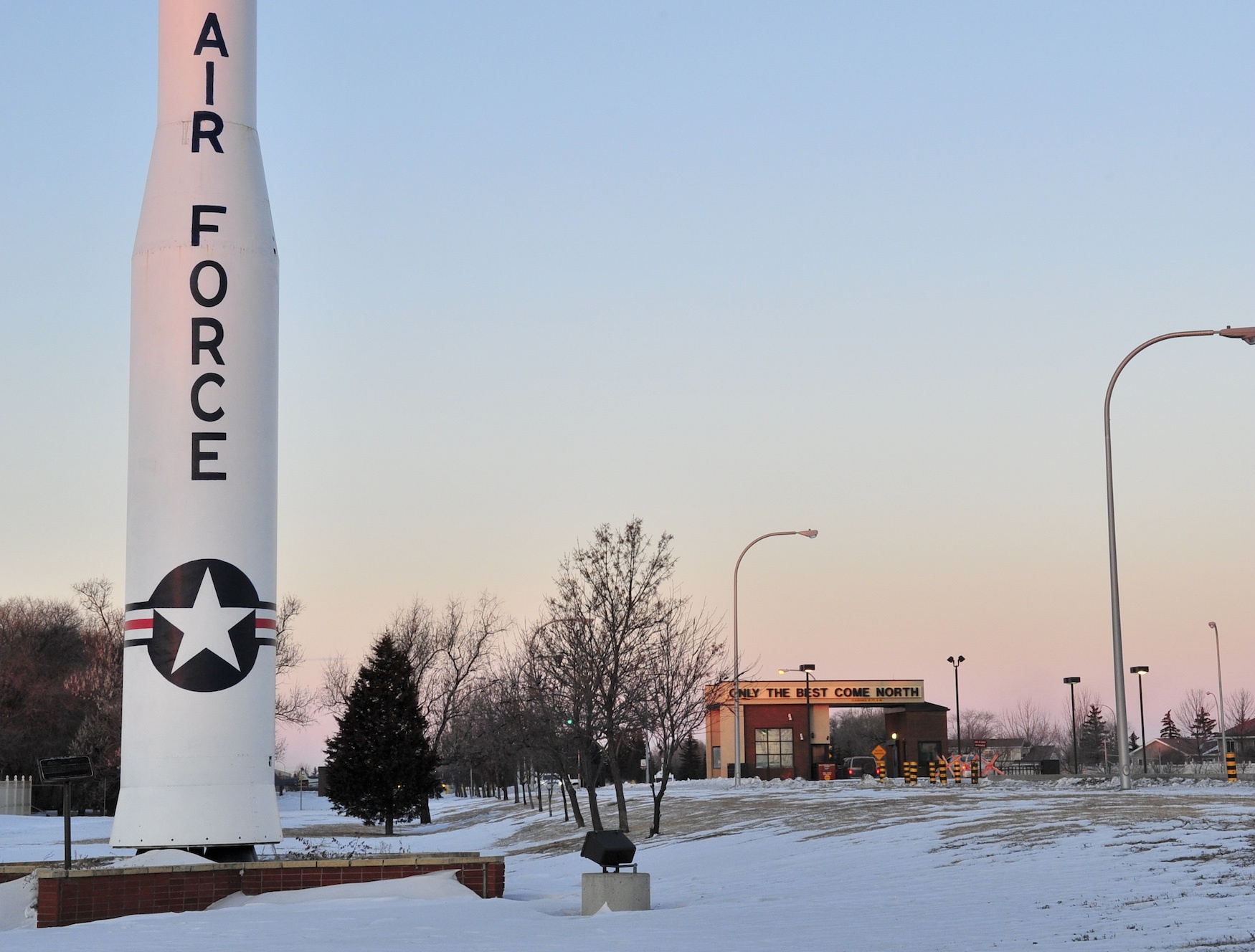
Five minutes in their company is enough to fully endorse the motto which illuminates the main gate to the air base: “Only the best come north”. As Technical Sergeant Brendan Halmann says of the weather conditions: “Yes sir, it’s pretty difficult. I’ve been 16 years in the air force and it’s one of the toughest flightlines I have ever been on. This place is a joke! People from Alaska come here and say it’s cold.”

The maintenance squadron operate a buddy system, working in twos so that they do not miss signs of hypothermia and frostbite, such as slurred speech and white patches on exposed skin.

The highest daily temperature record at Minot this January was minus 6C (22F). How long does winter last, I asked. “It begins July the fifth and ends the next year on July second,” one of the maintenance crew says. Not quite accurate, but almost – from Hallowe’en to the end of May, it is life in the freezer up here.

So how do they endure it? Firstly, there are a lot of indoor sports, from weight training to basketball and American football. The base, which is home to 3,000 people has its own schools, mall, restaurants and film theatre – and making a virtue of the brutal conditions, there are winter sports from ice fishing and dog sledding to skiing and hunting.

Colonel Jason Armagost, 5th Bomb Wing Commander, who is in charge of the B52 mission and the whole air base, says there is a sense of camaraderie which comes from living in such extreme conditions.

“There is an immense professional pride here. When military forces are deployed forward, they carry themselves differently. I see that here, it has to do somewhat with the isolation...they carry themselves in a more focussed way.”

He has an impressive library in his office, from Homer to Hilary Mantel. “I like pioneer history. That speaks to the mindset of people here, the stoicism and the willing acceptance of the environment. What they said about the 18th century pioneer was ‘cowards never came and the weak died along the way’. “That’s the mindset, they will get it done. The airmen have been getting it done for decades.”

“People will say there’s nothing to do here. I don’t believe that at all, even for the younger crowd. There are lots of volunteering opportunities in the community,” he says, although he concedes there may not exactly be a thriving young social scene. “You might not want to go and clean up a park on a Friday night in January.”

I’m jammed in behind the pilots in an instructor’s seat on board 60-0007, the seventh bomber built in 1960. Sitting askew and leaning forward like a backseat driver, I’m trying to remember fragments of yesterday’s parachute training when I scribbled down things instructors said like, “that’s important, so it’s not going to rip your neck off”, “keep flail injuries to a minimum” and “if the cows get big, pull!”

Fortunately, Major Josh Middendorf, an instructor pilot with a side-parting and a luxurious moustache, is sitting on the floor nurse-maiding me, helping me into my parachute and making sure I can hear the radio conversation between the crew.

In front, Dan Strelke, a 28-year-old pilot with 23rd bomb squadron is the aircraft commander, full of smiles and excited to be flying with his mate from 69th bomb squadron Capt Nick Jacks. Jacks is considerably more cheerful than his doomstruck shoulder patch which depicts a winged death’s head and the slogan Kiai O Ka Lewa which means Guardians of the Upper Realms and reflects the squadron’s pre-Pearl Harbour Hawaiian roots.

B52 aircraft are capable of dropping nuclear bombs
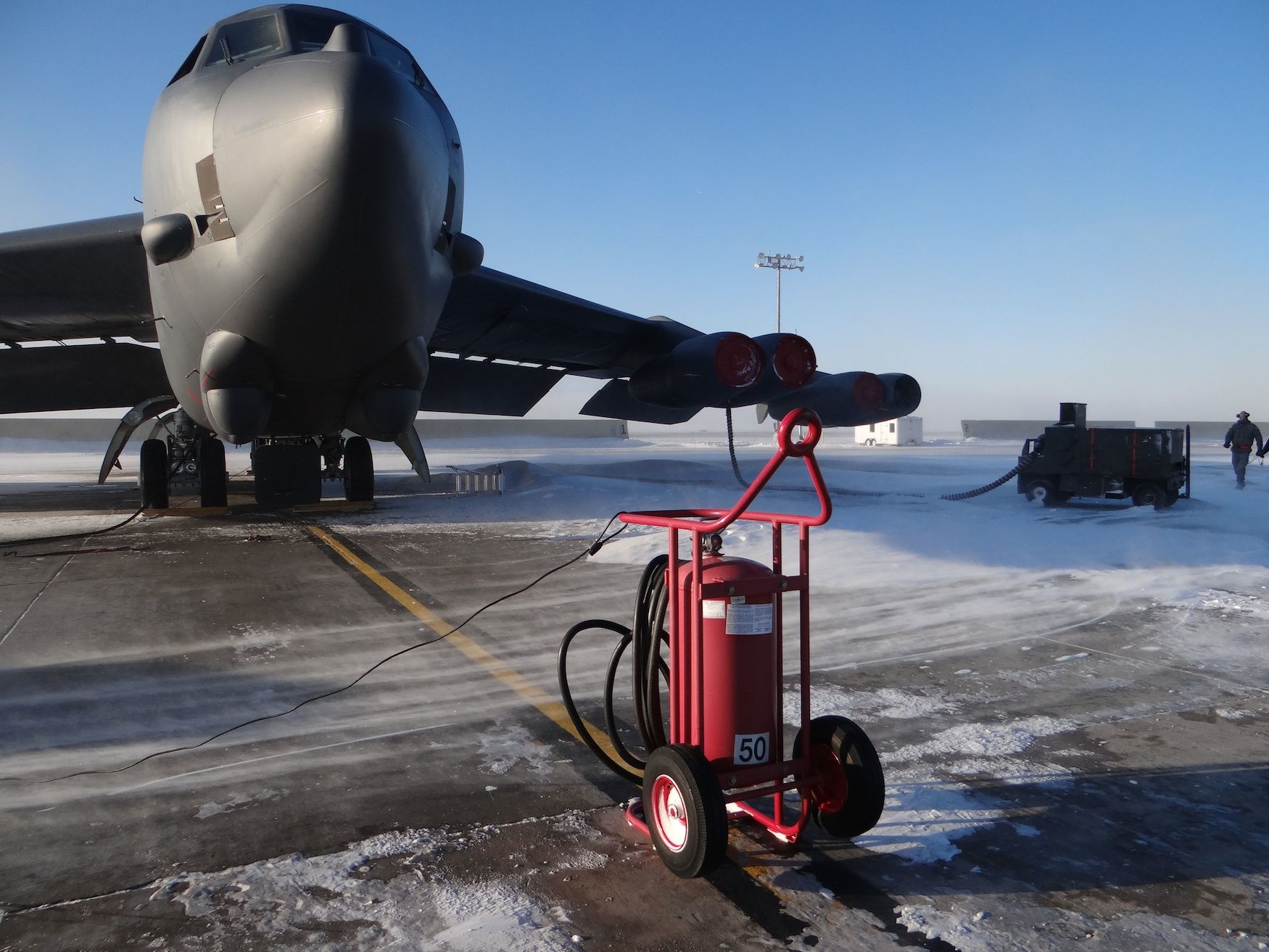
The blizzard conditions are so bad that we wait on the flightline for almost five hours before a break in the weather allows us to take off.

Suddenly we leave behind enveloping whiteness and are cruising at 25,000ft (7,620m) at a speed of Mach 0.63 (479 mph) accompanied by another B52 flying two or three miles ahead of us.

For 35 years, B52s were in a state of continuous alert, fully fuelled and ready to take off within 15 minutes. The end of the Cold War changed that, but there are still six B52 flights, five days a week from Minot as the crews who have taken eight months to learn to fly the vintage aircraft stay ready.

A B52 bomber sits on a snowy runway prior to take off

Flying above the winter landscape of the frozen Powder River, our flight plan includes a simulated attack carried out somewhere across the state line in Montana, where we will pretend to send out a miniature air launched decoy missile to confuse enemy radar.

Then we role-play the threat of a counter-attack, an imaginary phalanx of jets keeping us protected as we launch 10 cruise missiles.

After that, navigators who sit below the main cockpit in darkness lit only by their red and green displays, use the telescopic camera of the sniper pod, mounted on the right wing of the aircraft, to zoom in and track targets.

A laptop had been added to the pilot’s console, but apart from that it’s an all original interior - 32 dials providing a read-out on the eight engines which are controlled by a tightly packed set of levers like the type hammers of an old typewriter.

“It’s kind of like driving an old car,” Capt Strelke says. “It takes eight months training and it doesn’t handle like a new aircraft, so it’s a big challenge to learn to fly it.”

“Boeing built them when steel was cheap, so they lasted way longer than anyone expected. Things might go wrong but you have eight engines, so the aircraft will get you home.”

Another piece of original kit is the 55-year-old onboard oven - it has one temperature setting and is about the size of a grilled cheese sandwich, but ingenious crews have been known to make fajitas and brownies in there. Major Middendorf keeps us supplied with breaded mozzarella sticks while we wait for take-off.

The bomber was designed to drop nuclear bombs, but was adapted to drop conventional “dumb’ bombs and precision guided missiles - during Operation Desert Storm, they dropped 40% of all coalition bombs used against Iraqi forces. Down a ladder to join the navigators, I arrive just as they were homing in on targets at a municipal airport below. The co-navigator asks: “Would you like to release the missile, Mr Taylor?”

The ‘no touch’ policy set aside, I’m slightly ashamed to say I did lift the plastic cover and press the button, sending a theoretical JDAM Joint Direct Attack Munition on its 30-second journey to blameless Belle Fourche municipal airport for a direct hit on the end of the runway. Sorry, South Dakota.

Written by

David Taylor

Pictures by

David Taylor (on the B52 and some on the flightline)

US Air Force photographers:

SrA Malia Jenkins, A1C Sahara Fales, SrA Stephanie Morris, SrA Stephanie Morris, A1C Sahara Fales