| View in Browser |

|

|

Monday, September 8 |

|
Good morning and welcome to your daily political briefing brought to you by Philip Webster, as Westminster and Scotland ponder the impact of a possible Yes independence vote. |
In today's edition
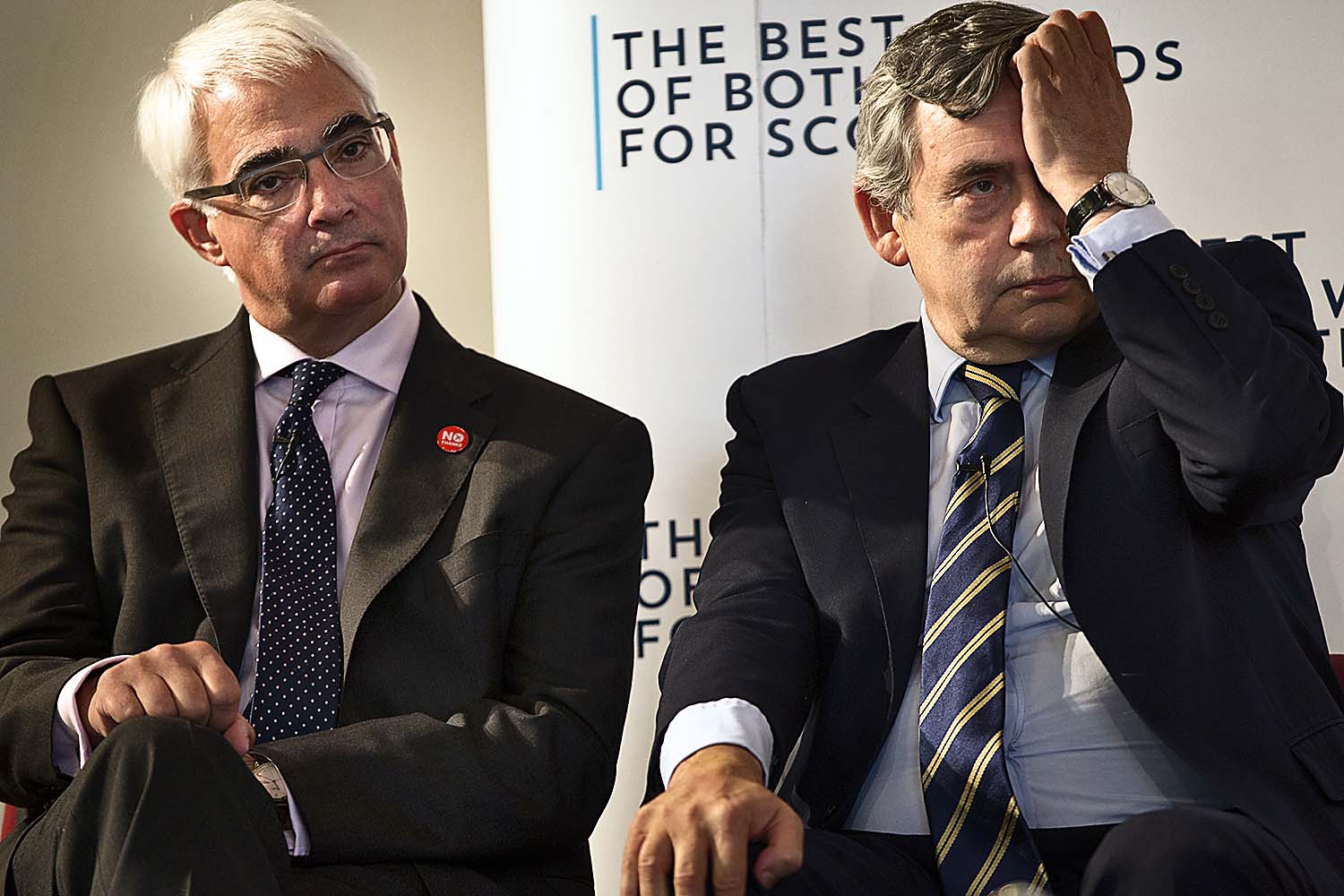
LATEST - Alistair Darling, leader of the No campaign in Scotland, denied on Today it was in a state of panic. "I've always said the polls will narrow." He said he was confident of victory. |
|
Essential political news and exclusive daily polling from YouGov direct to your inbox, with expert analysis from our leading columnists David Aaronovitch, Adam Boulton, Camilla Cavendish, Phil Collins, Danny Finkelstein, Tim Montgomerie, Matthew Parris, Hugo Rifkind, Jenni Russell, Rachel Sylvester and more. Any tips or feedback tweet us @TimesRedBox |

|
|
| Scottish referendum |
| Sterling falls as Westminster panics |
|
The first taste of the political and economic crisis that could follow a Yes vote in Scotland has come this morning. Sterling has fallen to its lowest in nearly 10 months. The pound fell nearly 1 per cent to around $1.6165, reaching lows not seen since November, when trading opened in Asian markets and there are fears it could fall much further amid the uncertainty. With Westminster in the grip of panic it’s looking like win-win for Alex Salmond, and David Cameron must be wishing it had all been organised so differently. There is now a real prospect that Salmond can get his main goal. However, with the main parties rushing out, and embellishing, a timetable for a fresh range of devolved powers (devo-max) over the coming days, even a narrow defeat would have the smell of victory for the nationalists. The Westminster parties must now be wishing they had gone for the idea of a second question on the voting papers, asking whether Scots wanted devo-max.They are going to get it anyway now, but the question would have offered a fresh option for those wanting change short of separation. A potential Yes vote has prompted renewed questions:
The SNP ridiculed this week’s all-party devo-max announcement as no more than “a piece of process” and wondered why, if it was so important, it had not been unveiled before millions started postal voting. The promise of a fixed timetable for the new powers, an attempt to shift away from the widely-criticised negative messages of the No campaign, echoes a similar package offered to Quebec before an independence referendum in 1995. It just worked. At Westminster it is now accepted that only Labour can save the Union. Its supporters have swung dangerously towards separation and over the final 10 days Miliband, Gordon Brown and the rest will have to bring them back. Otherwise nothing will be the same after September 18. Henry McLeish, a former first minister, said on Today the No campaign had been narrow, negative, patronising and lacking soul. The papers today are unanimous in accepting that the end of the Union could be nigh and demand a renewed effort to expose the dangers of a Yes vote. The Guardian says the No campaign “must somehow prevent its inescapable anxiety from morphing into fear and loathing.” The Telegraph says it is “incumbent upon Labour” to persuade their supporters to vote No. “Once decided, there is no going back,” it warns. “Too many British politicians seem to have treated Scotland like the actors treat Macbeth – the play whose name must not be spoken,” The Times complains in its leader. “The No campaign needs to wake up to the Scottish play’s tragic ending. It is a play all about those who would ‘wrongly win’. It ends in the death of a dear thing thrown away, as it were a careless trifle.” |

|
|
| Look to Quebec to save the Union | |
| Angus Macleod | |
|
It sounds like the last throw of the dice for the pro-Union side. But a mood is growing within Better Together that they have to organise a repeat of the rally in Quebec which helped keep the province part of Canada in 1995. Then, 100,000 Canadians gathered in a rally to say to the people of Quebec “please don't go”. At this late stage, it's highly unlikely Better Together could muster such numbers, but strategists feel they need something similar to spoil Alex Salmond's attempt over the next ten days to present Scotland as marching inevitably towards separation. Angus Macleod is Scottish Editor of The Times. |
|

|
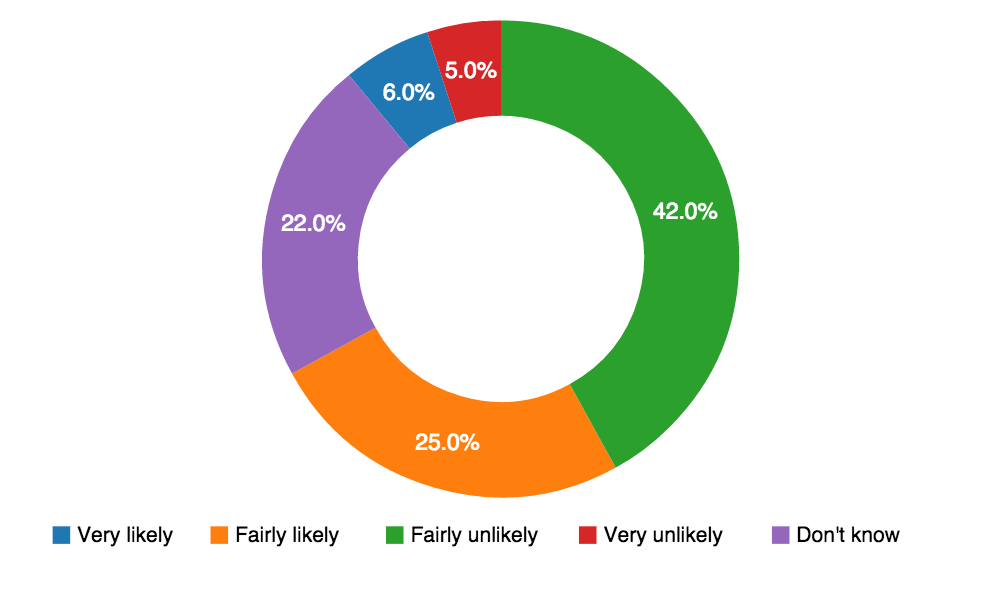
| How likely is Scotland to vote Yes next week? |
|
| Scottish referendum |
| A third of Britons think Scotland may vote for independence |
|
Yesterday a sensational Sunday Times/YouGov poll showed for the first time a tiny lead for a 'Yes' vote in Scotland, writes YouGov chief Stephan Shakespeare. I should point out that there's a margin of error of 3 per cent, and any pollster would call it "too close to call". Exclusively for Red Box, we asked last week what people throughout the UK thought should happen if Scotland votes No. There would be no triumphalism: indeed 35 per cent say the Scottish parliament should be given more devolved powers, and a further 29 per cent say it should keep its current powers. Only 18 per cent think the powers should be reduced. Last week, 47% expected a victory for 'No', compared to 31% who expected a 'Yes'. The poll is based on a weighted sample of 1,961 UK adults. |
| YouGov |
|
|
|
| Pride and passion are key to saving Union | |
| Magnus Linklater | |
|
This is the moment of truth for the Better Together campaign. It has ten days to win back the momentum which has shifted so dramatically in favour of Yes. What must it do to recapture the will of the nation. The changes hinted at by the Chancellor, George Osborne, will not in themselves be sufficient to do it. It needs to be backed by a campaign that is every bit as fervent and passionate as Alex Salmond’s; it must show that Scotland within a united kingdom has the greater prospects; that national pride is enhanced, not diluted, by membership of a union which is itself moving forward. |
|
| Politicians' pay |
| Osborne delays MPs’ pay battle till after election |
|
There is never a right time to push up MPs’ pay, however far they fall behind comparable groups. And when Westminster is facing a potential convulsion on September 18, this clearly is not the moment. Even so Marcial Boo, the chief executive of the Independent Parliamentary Standards Authority (Ipsa), is pressing ahead with plans for a 10 per cent rise despite the already stated opposition of the government. In his first interview since taking up the post in June, he told The Sunday Telegraph that MPs needed the pay rise to “catch up” because their £67,060 salaries had fallen behind those of comparable public-sector workers and politicians overseas. But George Osborne has swiftly kicked the issue into the next parliament. He has made plain that the rise is unacceptable at a time of continuing restraint in the public sector. “This is not the final verdict, this is not the final report”, he said. |
|
|

|
| Four questions for September 19 | |
| Daniel Finkelstein | |
|
Until now almost nobody believed that Scotland would vote for independence and remarkably little thought has been given to it. The long term impact of a Yes vote would, naturally, be huge. It would change the meaning of Great Britain and shake the party system to its core. Because of its impact on the left (making it impossible for them to win majorities without capturing southern centrists), it might end up reshaping the centre and right too. Which, of course means the immediate impact will be enormous too. Four things I'd guess. Naturally, massive policy questions, dwarfing other debates and rewriting manifestos and the election campaign. Great pressure on David Cameron over vetoing a devo-max option on ballot papers with calls to resign being offset by a third issue - the vast impact on Labour's future and a crisis over the way they handled the Better Together campaign. And one more thing. A great debate about how the next government should be formed. What role should Scottish MPs play? A debate which would start on September 19 with questions over the position of MPs like Danny Alexander and Douglas Alexander. |
|
| TUC conference |
| Unions forecast lengthy period of unrest |
|
The TUC conference has smacked of irrelevance in recent years. But with the election months away its decisions this year will matter. Union leaders meeting in Liverpool are planning to play into workers’ discontent that the heralded economic recovery has not been accompanied by improvements in pay. Already strikes are planned for next month in the health service and local government and could presage a prolonged period of industrial unrest in the run-up to next May. In the past labour confrontations have damaged the governing party, as Heath and Callaghan found. But Miliband’s perceived closeness to the unions will be used against him. The health unions are balloting on strikes which could be held on October 13, a day before local government workers in England and Wales stage a 24-hour walkout in a separate row over pay. Miliband will attend the general council dinner in Liverpool tonight. |

|
|
“We will be zombies, walking dead, because a fundamental part of our identity will have been killed” |

|
| Labour can be the party of voters’ dreams |
| Damian McBride |
|
Facing the Ukip threat, Ed Miliband must show he understands aspiration better than anyone. Scrapping tuition fees would be a good start, allowing the middle classes to keep more money and removing barriers for the working-class. |
|
| 20 |
| Centimetres: decline in the average annual rainfall of the new UK if Scotland becomes independent |

|
| In the Commons |
|
|
|
| Elsewhere |
|
| The Times & The Sunday Times Membership | ||
| £1 for 30 Days | ||
| Join today and enjoy 30 days of award-winning journalism for just £1. With our Digital Pack you'll enjoy a tablet edition, smartphone app, access to both websites and an exclusive sports app. | ||
|
||

|

| Unsubscribe from Red Box |
|
This email was sent by: %%Member_Busname%% %%Member_Addr%% %%Member_City%%, %%Member_State%%, %%Member_PostalCode%%, %%Member_Country%% |